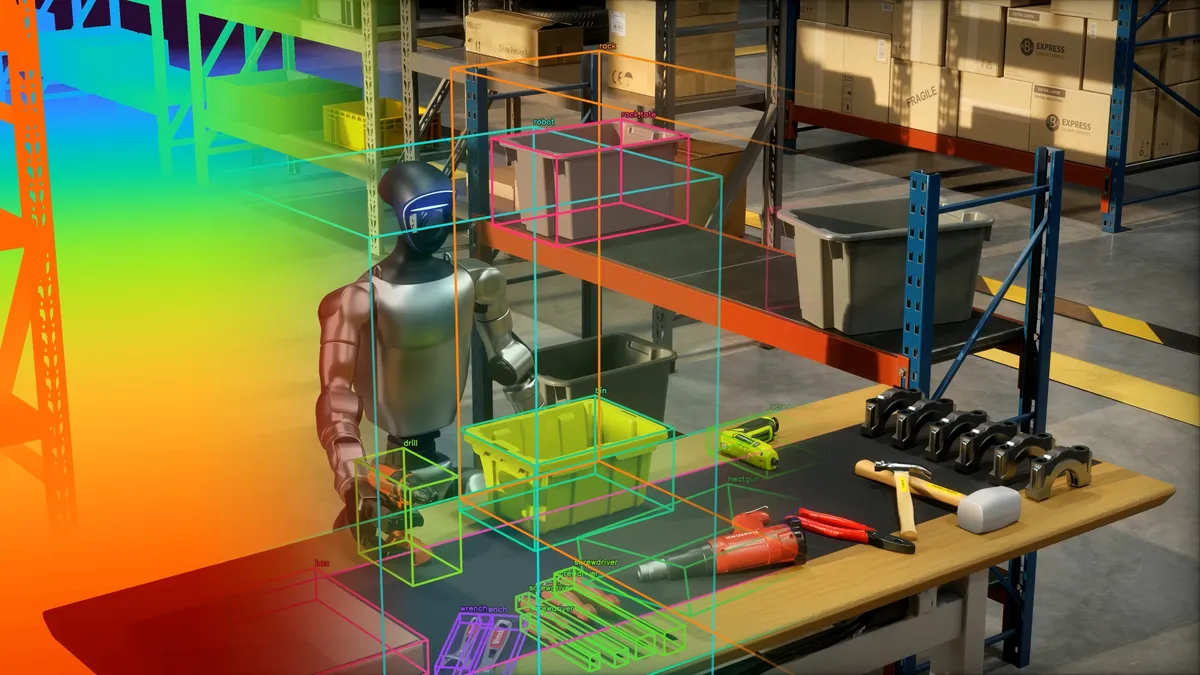
NVIDIA has added Omniverse libraries to its Agent Toolkit, giving AI agents callable tools for RTX sensor simulation, GPU-accelerated physics, OpenUSD operations, and simulation-ready asset validation. The July 20 announcement also includes a Blender blueprint and says SideFX, PTC, and several startups are integrating the components into existing 3D workflows.
The important change is narrower than “AI can now build virtual worlds.” A production robot cannot train safely inside a scene that merely looks realistic. The assets need correct scale, collision geometry, physical properties, semantic labels, and calibrated sensors. NVIDIA is packaging those preparation and inspection steps as tools an agent can coordinate.
That could remove a meaningful bottleneck in physical AI. It also creates a new control problem: an agent that edits a robot’s training world can quietly change the behavior the robot learns.
What NVIDIA actually released
The announcement names three main capabilities.
- ovrtx exposes RTX rendering and simulated camera, lidar, and radar output.
- ovphysx adds GPU-accelerated contacts, mass, friction, motion, and other physical behavior.
- CAD-to-SimReady skills convert design data into OpenUSD assets with properties needed for simulation and validation.
These libraries sit underneath NVIDIA Agent Toolkit. The model can inspect a scene, decide which tool to call, run a validation workflow, and return evidence to a developer or technical artist. It is orchestration over specialized simulation software rather than an LLM replacing the simulator.
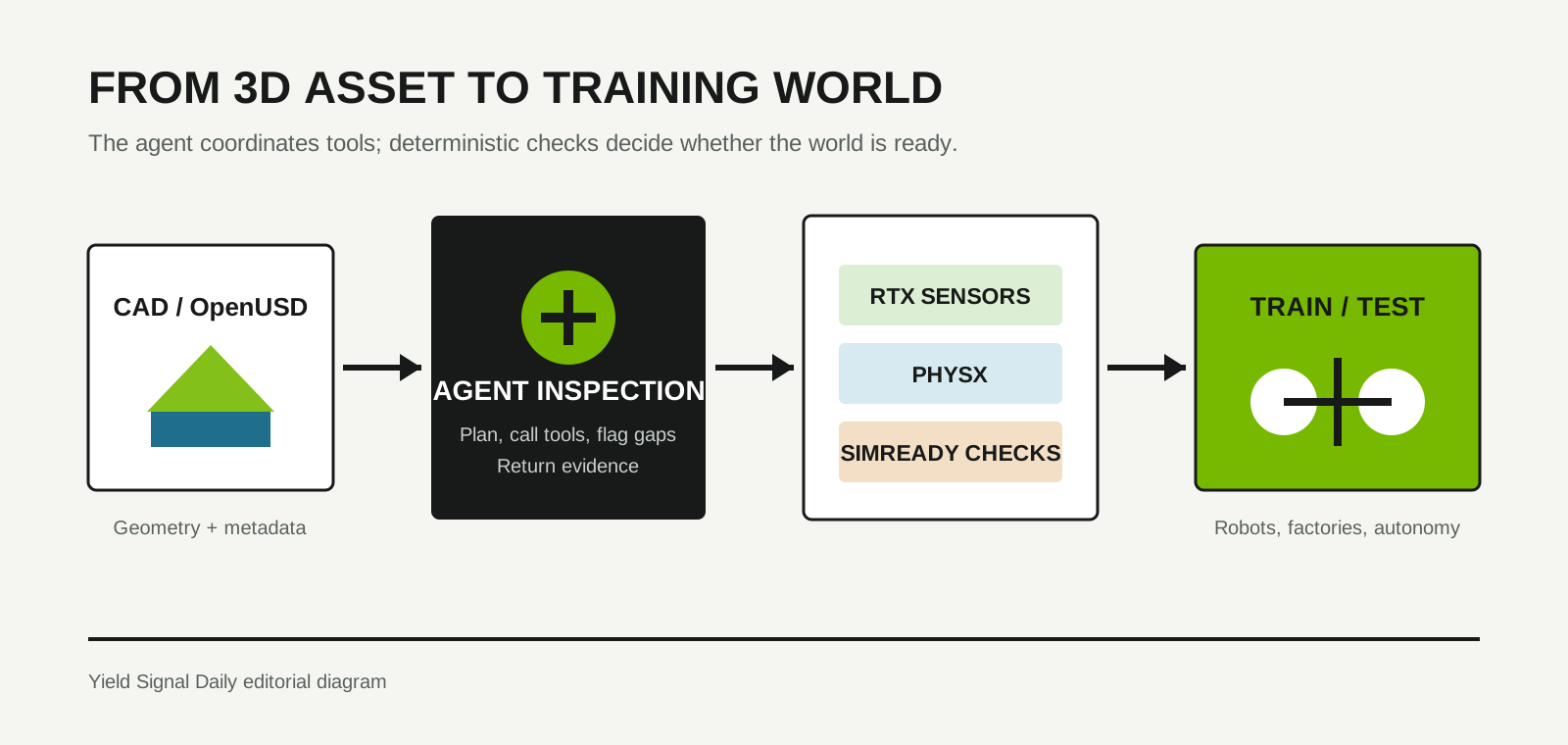
Figure: An agent can coordinate scene inspection and simulation tools, but the release decision should remain a deterministic, reviewable gate. Yield Signal Daily editorial diagram.
The distinction matters because tool quality determines the upper bound. A model cannot infer an object’s real mass from an attractive render. It needs metadata, an engineering source, or a human decision. The agent can find that the value is missing; it should not silently invent the number and publish the asset.
Simulation-ready means more than photorealistic
A game asset can be successful if it looks convincing from the player’s camera. A physical-AI asset has a different contract. A robot policy may use collision boundaries, depth maps, reflectivity, object classes, and affordances that a human viewer never notices.
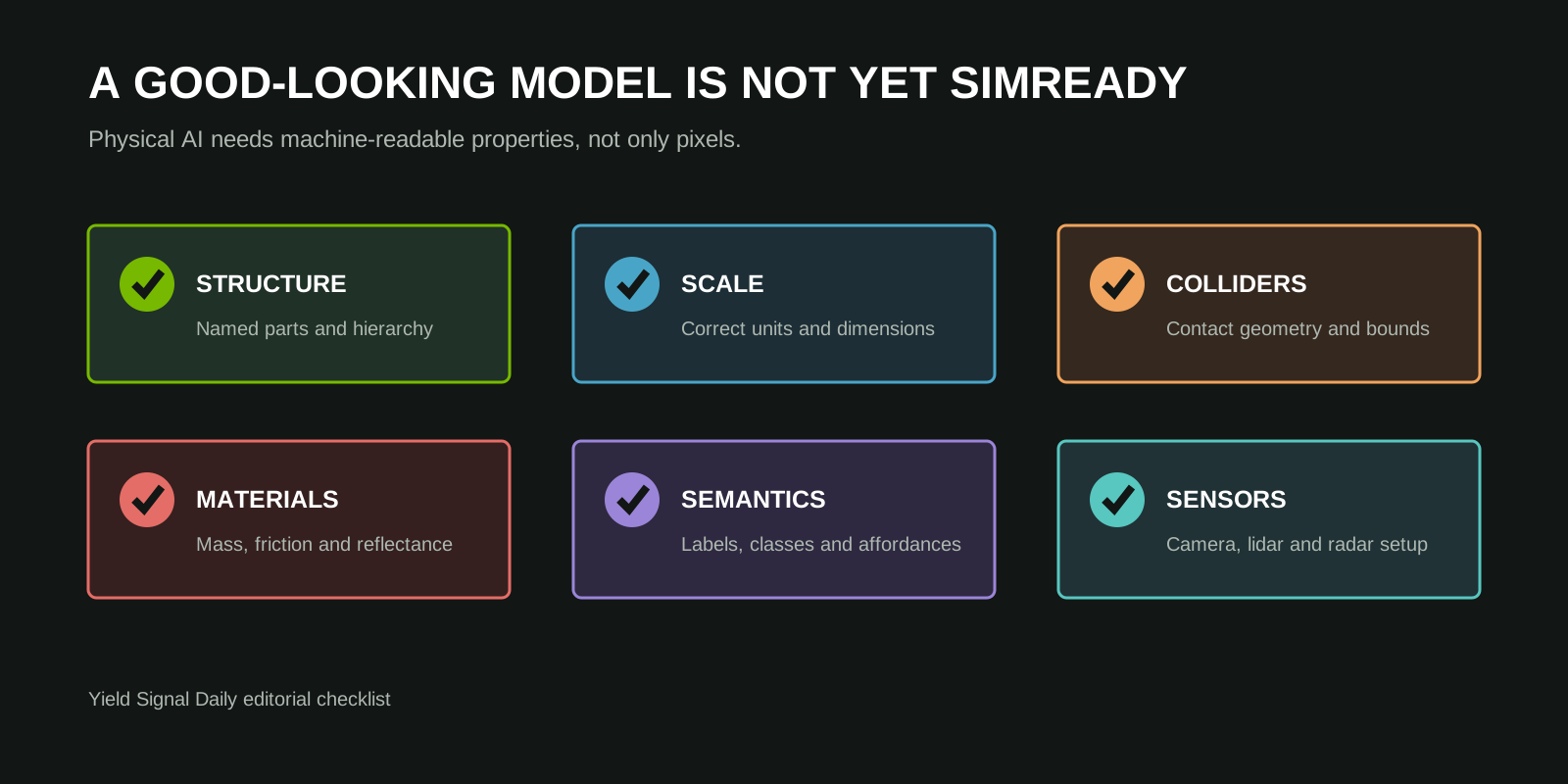
Figure: Structure, scale, colliders, materials, semantics, and sensor configuration are separate acceptance criteria. Yield Signal Daily editorial checklist.
This is why automated preparation is valuable. Large warehouses and factories contain thousands of repeated objects and many versions of the same CAD assembly. An agent can scan those assets, detect missing colliders, compare units, request a sensor render, and produce a queue of failures for review. That is tedious work with clear tool boundaries.
The harder cases are ambiguous. A glossy surface may need different optical properties for a camera test and a lidar test. A door can be modeled as static geometry or as an articulated object with constraints. The correct answer depends on the downstream experiment. An agent needs a declared simulation purpose, not only access to a folder of models.
The useful architecture keeps the model above the physics
The strongest production pattern is to let the model operate at the planning layer. It can translate a request such as “prepare this loading bay for forklift perception tests” into bounded actions: inspect hierarchy, normalize units, add required sensors, run physics checks, and generate a report.
The simulator should still own numerical execution. Schemas should reject invalid values. Policy should block forbidden scene changes. A human should approve releases that affect safety-critical training or evaluation.
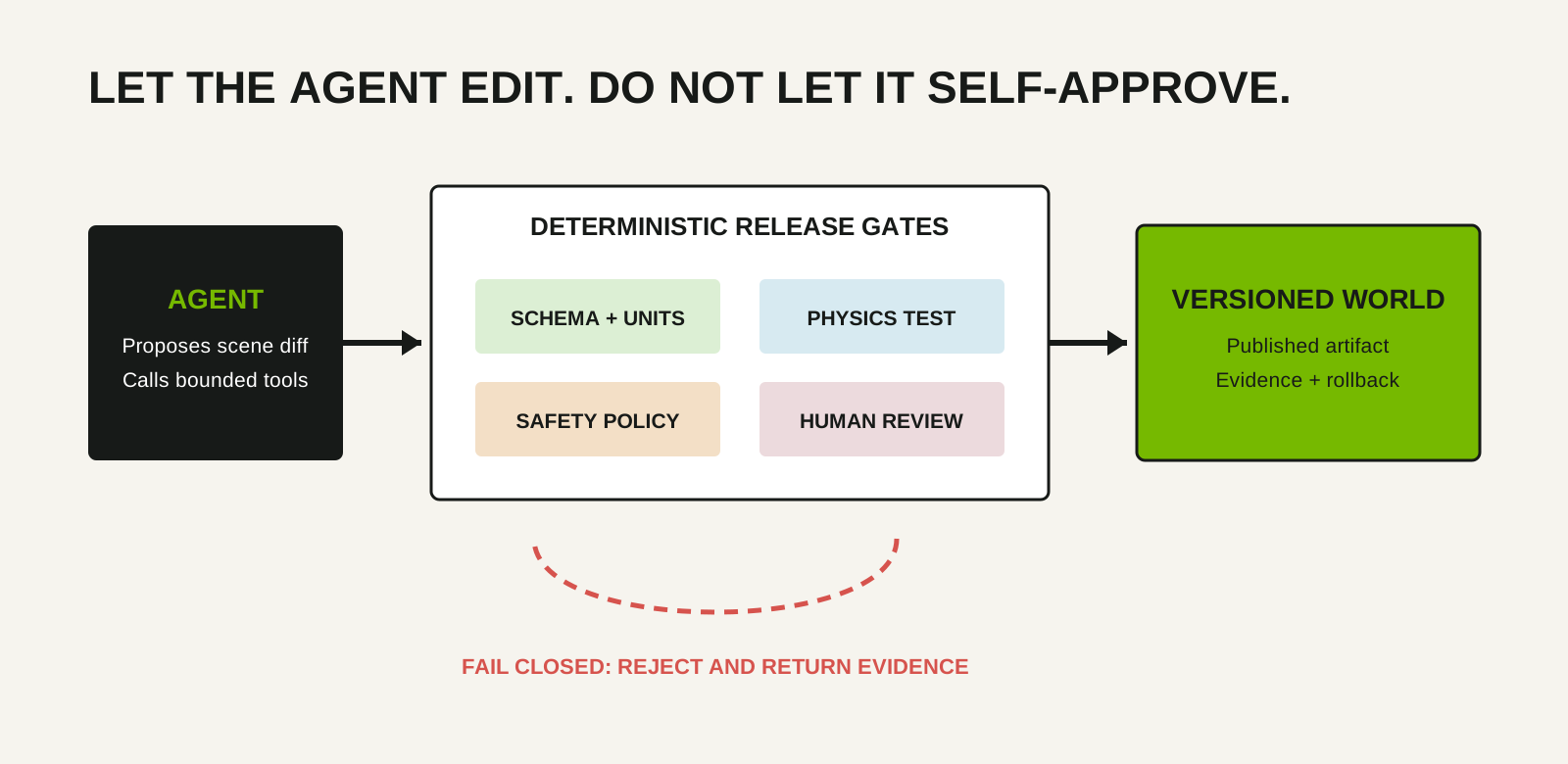
Figure: Agent-generated scene changes pass through deterministic schema, physics, safety, and human-review gates before publication. Yield Signal Daily editorial diagram.
This separation also makes failures diagnosable. If a robot behaves incorrectly, the team can identify whether the cause was the source CAD, an agent-authored transformation, a simulator configuration, a policy-training bug, or a real-world domain gap. A single opaque “generate world” step would make that chain much harder to audit.
Versioning is mandatory. Each scene change should record the source asset, tool version, agent run, parameter diff, validation results, approver, and rollback target. A visual screenshot is useful evidence, but it is not a substitute for machine-readable provenance.
NVIDIA is turning its stack into agent-callable infrastructure
The libraries reveal a broader platform strategy. NVIDIA already supplies GPUs, simulation software, robot-training environments, and deployment tooling. Agent Toolkit creates a common orchestration surface over those components.
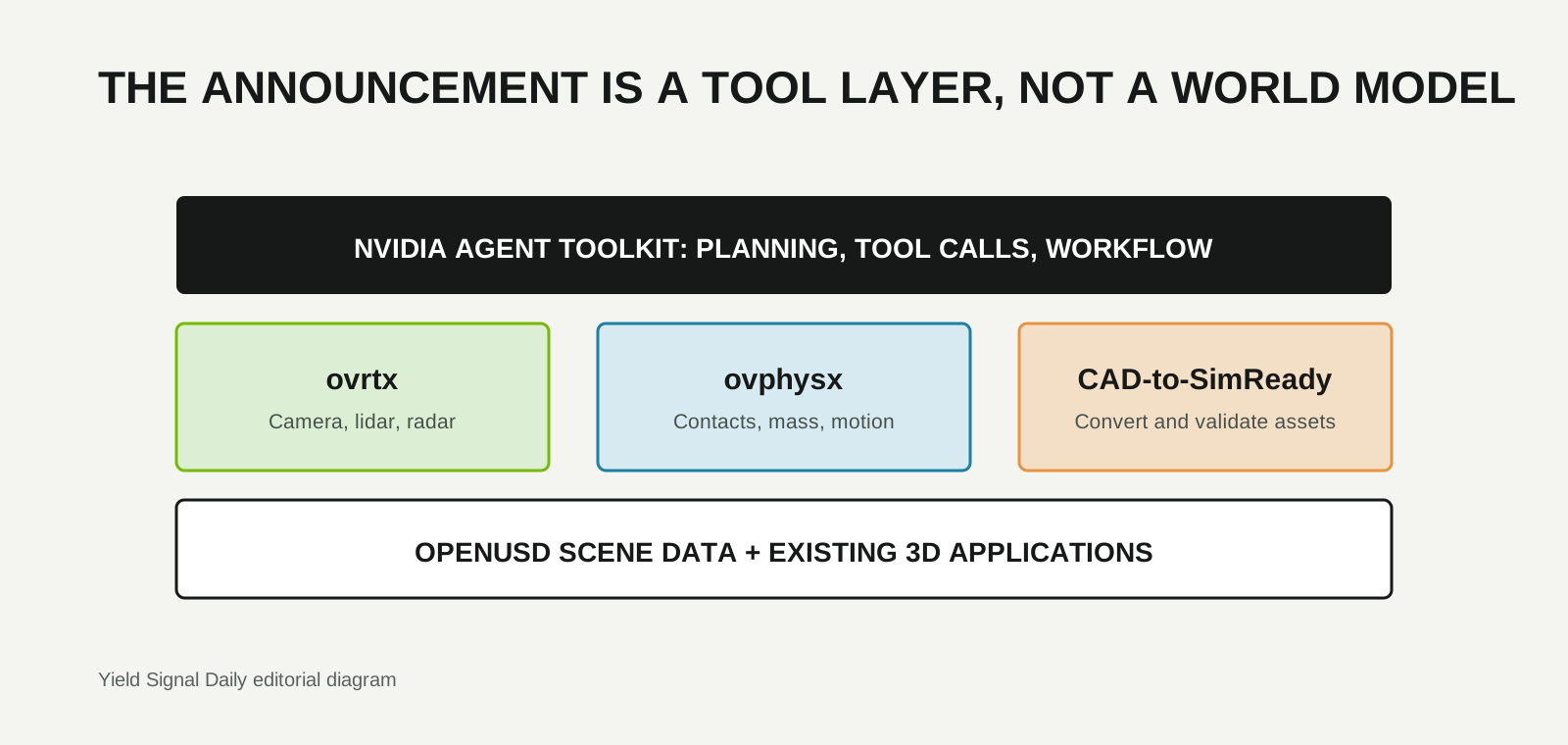
Figure: The announcement exposes existing simulation capabilities as agent-callable tools over OpenUSD and 3D applications. Yield Signal Daily editorial diagram.
That can help software vendors add physical-AI features without replacing their own applications. NVIDIA says SideFX is exploring agent-assisted Houdini workflows, while PTC is connecting Onshape design data with OpenUSD and RTX simulation. The Blender blueprint demonstrates a similar pattern in an accessible creation tool.
The lock-in question is still real. OpenUSD improves data portability, but workloads may depend on NVIDIA-specific rendering, physics, and runtime behavior. Teams should preserve canonical source assets, document proprietary extensions, and test which parts of the pipeline can run independently.
The near-term win is validation, not autonomous world building
The most credible use case is not asking an agent to invent a factory. It is asking the agent to make existing engineering content testable: detect omissions, call the correct simulator, compare outputs against acceptance rules, and route uncertain changes to a person.
That workflow can save expensive technical-artist and robotics-engineer time while remaining measurable. Teams can track assets processed, validation failures found, human correction rate, simulation regressions, and time from CAD import to approved scene.
The announcement becomes important if those metrics improve without weakening provenance. Physical AI will be built in simulation, but safe simulation needs stricter controls than an ordinary creative-generation pipeline. The agent should accelerate the preparation work. It should never become the only system deciding whether a virtual world is true enough to train a real machine.
Simulation assets do not remove the physical-system gap. Anthropic’s robot-interface tests show how control abstractions change outcomes, while the Robostral safety analysis and Damage Scout inspection test cover sensing and visual evidence.