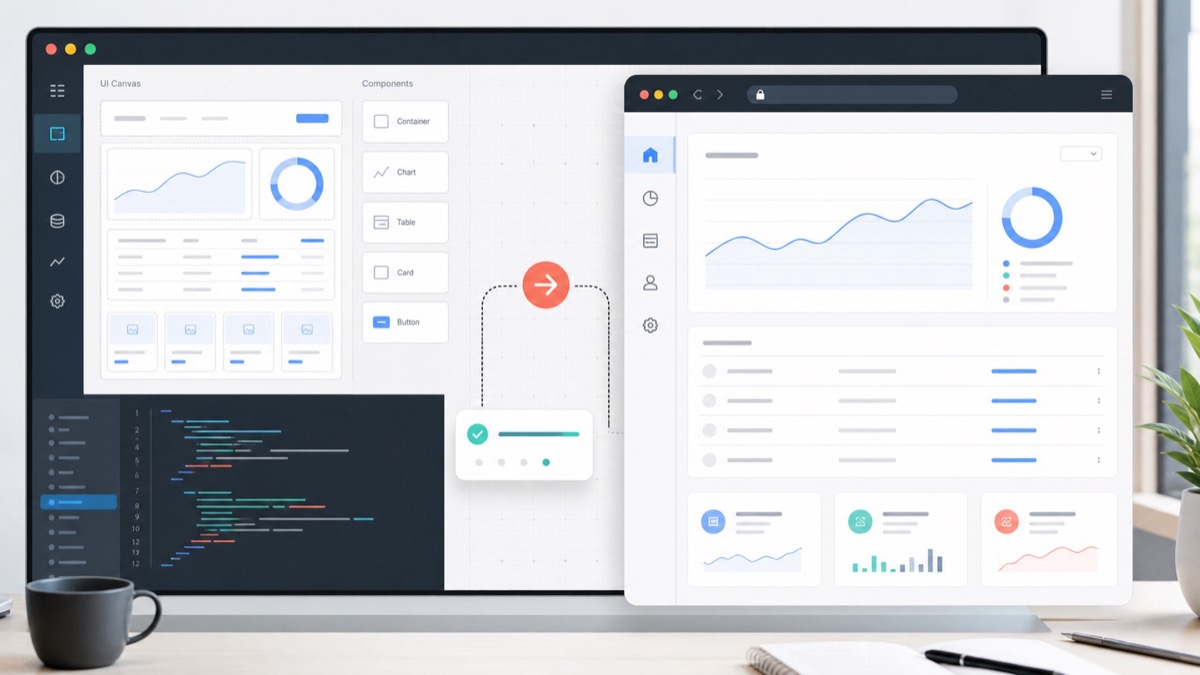
Google AI Studio now lets developers assign a short, memorable ai.studio subdomain when they publish an application.
Instead of sharing a long infrastructure-generated address, a developer can claim a URL in this format:
https://your-app-name.ai.studioThe feature sounds cosmetic, but it removes friction from the part of AI prototyping that often matters most: getting another person to open, remember, and evaluate the app.
How the custom URL works
Google’s deployment documentation says the preferred subdomain is selected from the Publish flow in AI Studio Build mode. Names are globally unique across projects and assigned on a first-come, first-served basis.
If an app is unpublished or deleted, its subdomain is released and can be claimed by someone else. To move a name to another app, the current deployment must first release it.
This is a platform subdomain, not a custom domain that the developer owns. A team cannot treat example.ai.studio like app.example.com, transfer it through a domain registrar, or assume it will remain reserved after unpublishing.
The app still deploys to Cloud Run
The friendly address does not replace the underlying infrastructure. AI Studio deployments create corresponding services on Google Cloud Run.
Google currently documents two paths:
| Deployment path | Setup | Intended use |
|---|---|---|
| Starter Tier | Up to two published apps without a new Cloud project or billing account | Fast prototypes and lightweight demos |
| Standard Deployment | Linked Google Cloud project with billing enabled | Production services needing normal Cloud controls and scale |
Starter Tier services run in a single Cloud Run region. Google also notes eligibility restrictions for users with current or previous billing accounts and for several Workspace account types.
The ai.studio URL therefore improves presentation, while Cloud Run still determines region, runtime, scaling, logs, and most operational behavior.
Why this matters for AI app distribution
AI coding tools have dramatically shortened the time from prompt to working interface. Distribution has not improved at the same rate.
A raw deployment URL creates several small problems:
- It is difficult to say aloud or type manually.
- It looks temporary to nontechnical reviewers.
- It is easy to confuse with another environment.
- It gives little clue which project the link opens.
- It is awkward in a presentation, message, or social post.
A memorable platform URL makes a prototype feel intentional. That can improve user testing, internal adoption, classroom sharing, hackathon demos, and portfolio presentation.
What it does not solve
Teams should not confuse a clean address with production readiness.
Before sharing an AI Studio app widely, verify:
API cost ownership: Google says calls made by shared users count toward the app owner’s usage. Paid models can create real cost.
Secret handling: Current Build mode places GEMINI_API_KEY in the server-side environment rather than client code, but third-party secrets must follow the same pattern.
Authentication: A public URL is not an access-control system. Sensitive apps still need identity, authorization, and data isolation.
Abuse controls: Rate limits, quotas, content safeguards, and budget alerts should exist before a link reaches a large audience.
Observability: Cloud logs, model-call telemetry, error tracking, and user feedback are needed to understand failures.
Data policy: Prompts, uploaded files, and generated outputs may contain sensitive data. The app needs a clear retention and privacy policy.
Naming becomes a small operational decision
Because subdomains are global and reusable after release, teams should choose names carefully.
Use a name that identifies the product rather than a temporary experiment number. Avoid trademarks, personal data, and environment secrets. If separate staging and production deployments are needed, encode the environment deliberately.
For a serious public product, a domain the company controls remains the stronger long-term choice. It provides ownership, email alignment, redirects, analytics continuity, and freedom to move hosting providers. The ai.studio URL is best viewed as a polished bridge between prototype and owned distribution.
The signal
The most effective developer platforms increasingly own the entire path from model prompt to shareable application. Custom ai.studio URLs are a small feature in that stack, but they address the exact moment when a private build becomes a public experience.
For prototypes, that final meter often determines whether the work is actually tested.