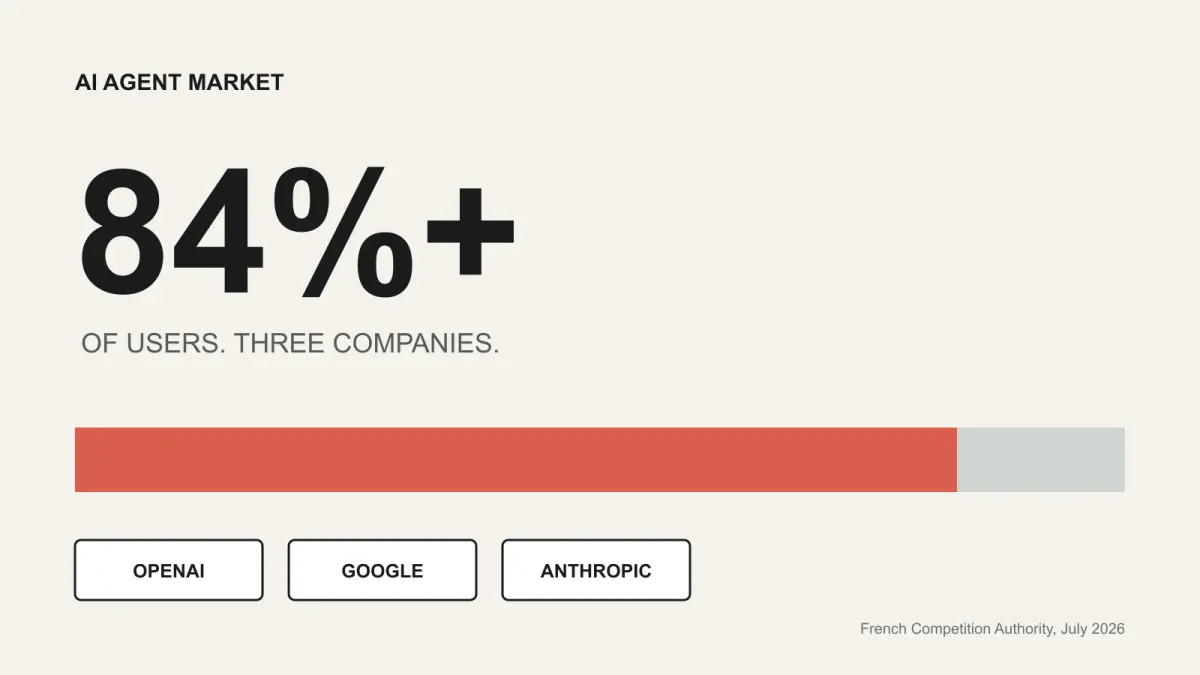
OpenAI, Google, and Anthropic together account for more than 84% of AI-agent users, according to a July 17 opinion from France’s Autorite de la concurrence. The authority gathered about 40 contributions while examining agent platforms, infrastructure, interoperability, and agentic commerce.
The percentage is more important as a distribution signal than as a model leaderboard. Agent developers can build on third-party models, but reaching users requires placement inside browsers, operating systems, productivity suites, messaging products, clouds, and app stores. The companies that already control those surfaces can make their agents the default gateway.
That creates a new version of search-platform risk: an agent may not only rank services. It may choose the service, pass user data, negotiate terms, and complete the transaction.
The 84% figure needs a careful reading
The authority reports the three-company figure as an aggregate. Its English summary does not provide individual shares for OpenAI, Google, and Anthropic, and the figure should not be divided evenly or treated as a revenue estimate.
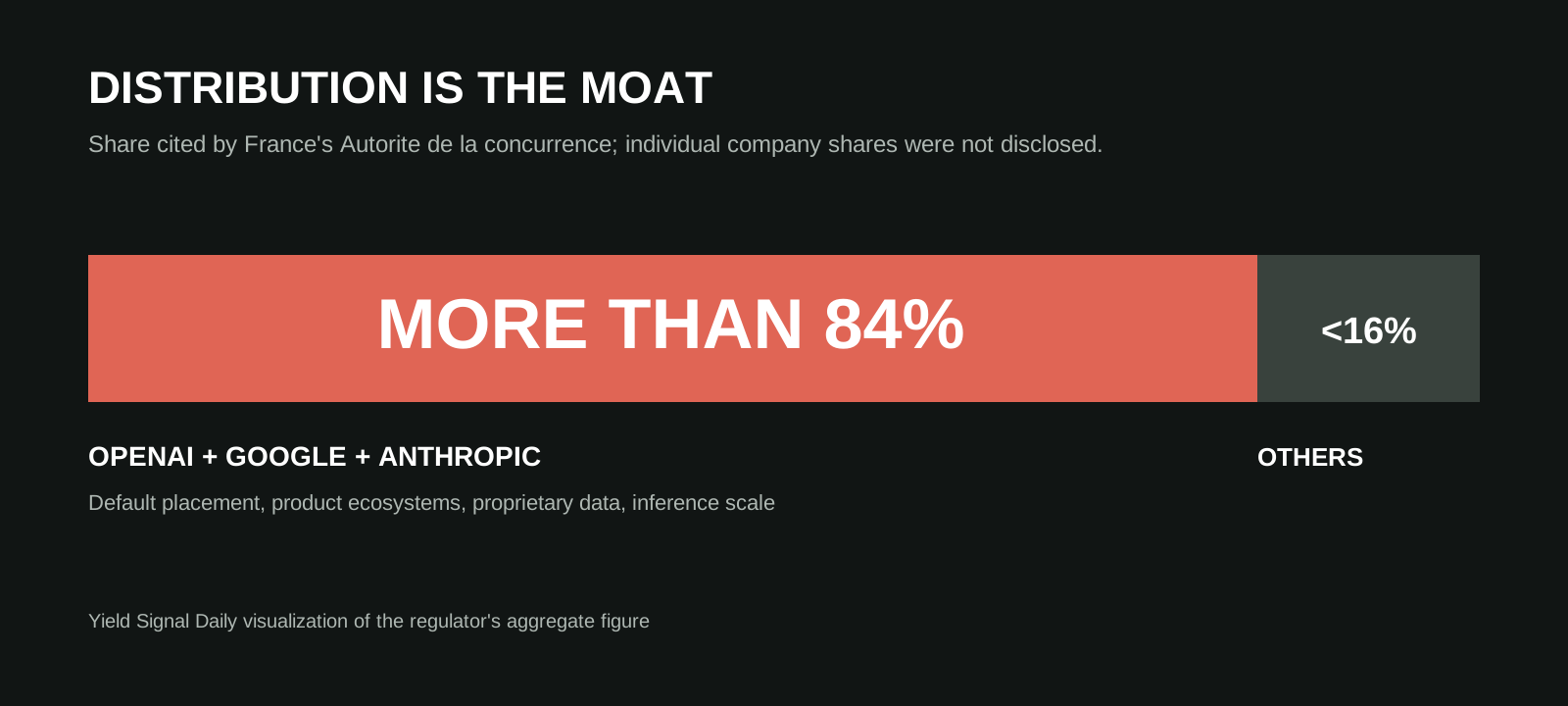
Figure: The regulator cites more than 84% for the three providers combined and does not disclose their individual shares in the summary. Yield Signal Daily visualization.
The same document says barriers to entering agent development are lower than barriers to training a foundation model. A startup can call external APIs or use open models. Expansion remains difficult because the startup still needs users, proprietary data, reliable inference, integrations, and a way to absorb repeated agent-compute costs.
This explains why a technically strong agent can remain a feature rather than become a platform. Model access gives the company capability. Distribution gives it repeated use, context, feedback, and an opportunity to become the interface through which other services are discovered.
Agentic commerce raises the stakes
The authority says traffic currently redirected from AI agents directly to e-commerce sites is below 5%. It presents a 2030 scenario in which that channel could reach 20% to 25%. That range is not a guaranteed forecast, and it refers to traffic rather than completed purchases.
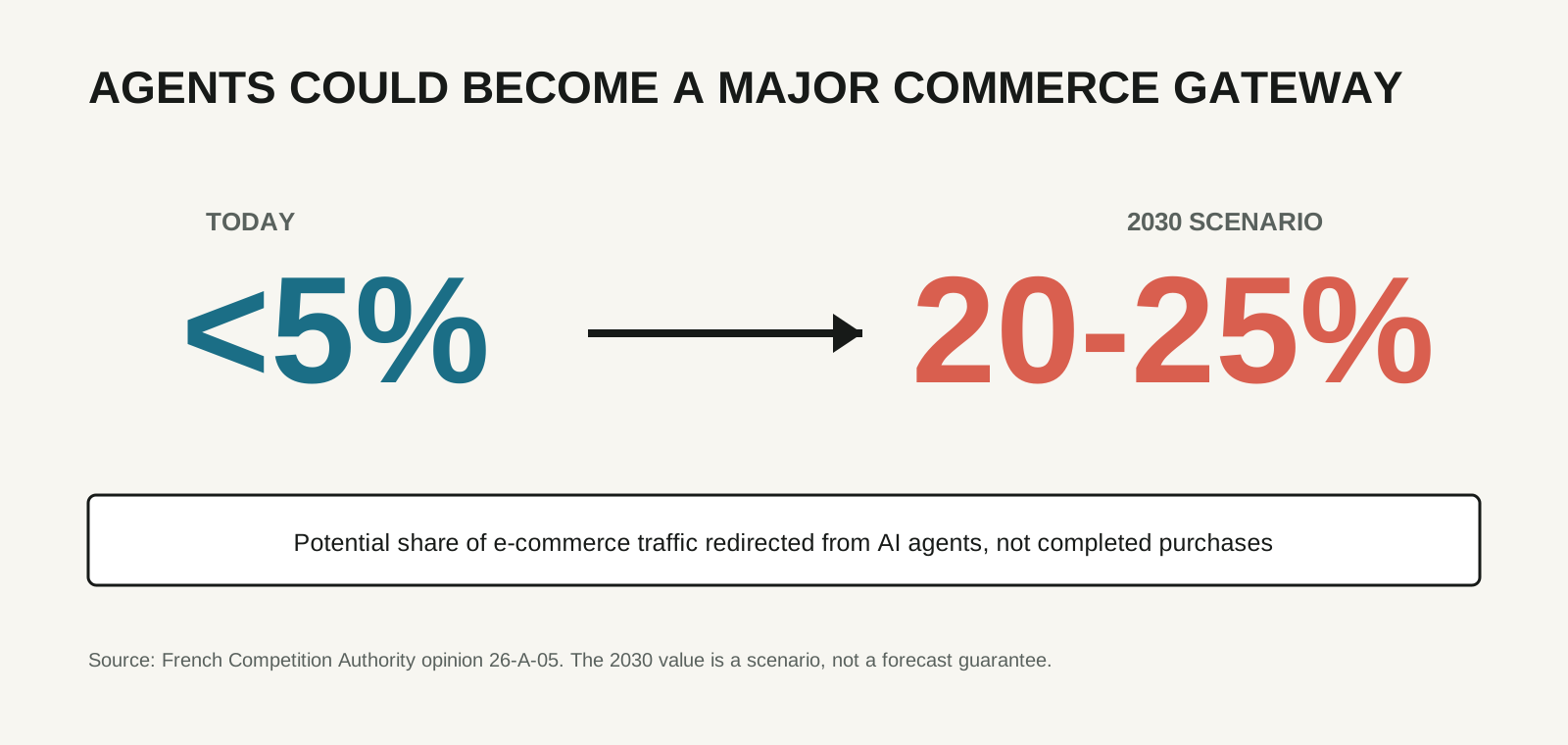
Figure: Agent-referred commerce traffic is currently small, but the regulator describes a much larger possible channel by 2030. Yield Signal Daily visualization of opinion 26-A-05.
Even the lower scenario would matter. Today, a merchant can compete for a search result, recommendation page, social post, or advertisement. In an agent interface, the user may receive one synthesized answer and one proposed action. The selection process becomes less visible.
An agent could prefer a vertically integrated service, a paid partner, a source with favorable licensing, or a merchant whose catalog is easiest to parse. None of those outcomes requires an explicit false statement. Ranking and tool availability can steer demand before the user sees alternatives.
The authority also warns that merchants may lose behavioral data when the purchase journey remains inside the agent. The gateway learns the user’s request and decision; the underlying seller receives only the transaction it was allowed to fulfill.
The agent controls five valuable junctions
An agent platform can mediate discovery, ranking, identity, payment, and post-purchase support. It can also retain the memory that makes each later transaction easier.
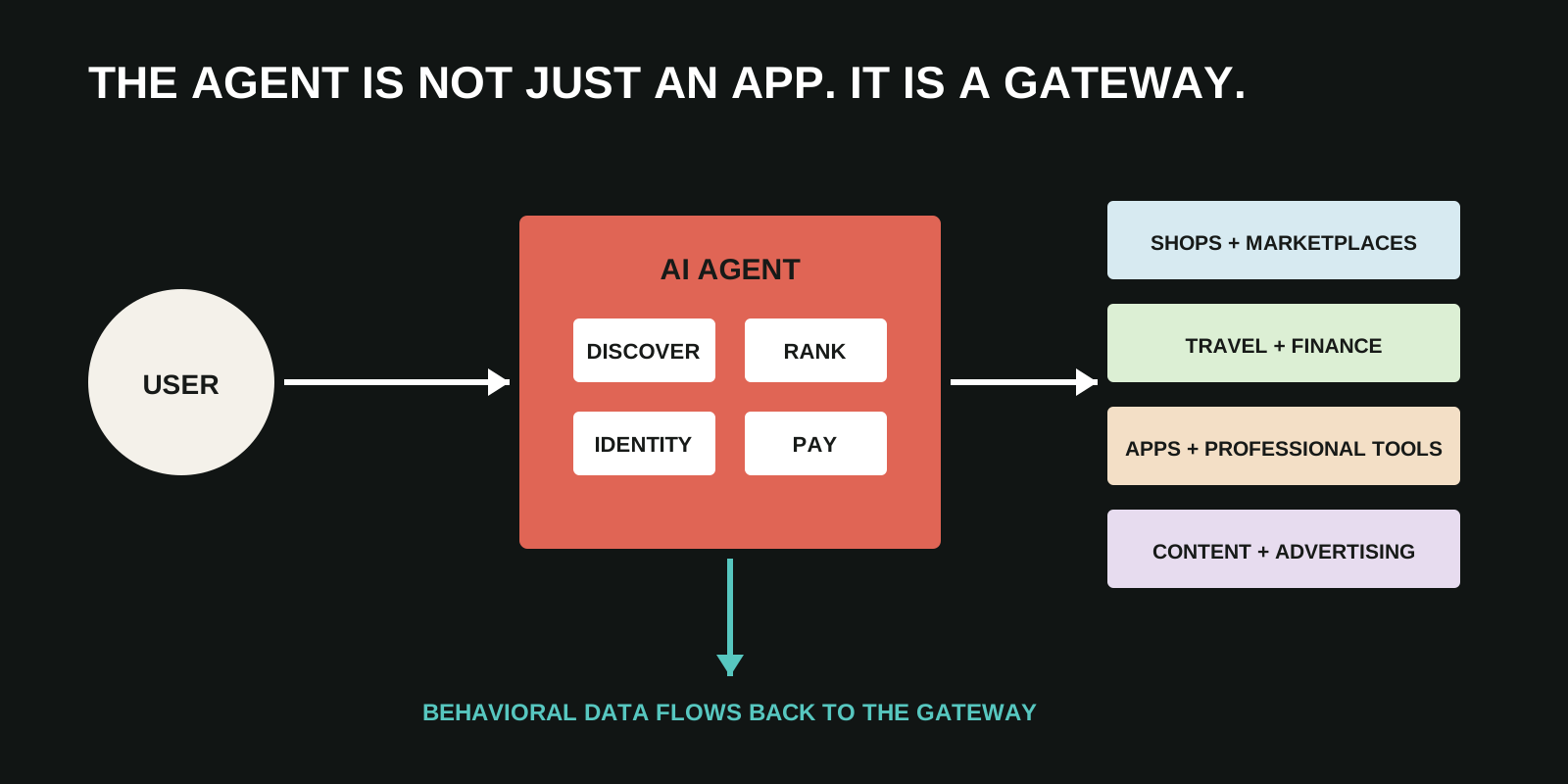
Figure: A general agent can become the control plane for discovery and action across many service categories. Yield Signal Daily editorial diagram.
That combination is stronger than an ordinary chatbot. A platform with default distribution can observe which recommendation the user accepted, which price changed the decision, and which workflow completed successfully. Those data improve personalization and increase switching costs.
Standards can either reduce or deepen this power. Open protocols let independent agents call the same services and allow providers to support many clients. A standard governed by one dominant operator can instead define terms that favor its own models, identity system, payment rails, or marketplace.
The regulator therefore recommends open and interoperable standards, effective choice among agents, and close scrutiny of the parameters that influence selection and ranking.
Portability must include context and authority
“Export your chats” is not enough to switch a mature agent. The useful state includes preferences, durable memory summaries, connected tools, delegated permissions, audit history, and the provenance of important facts.
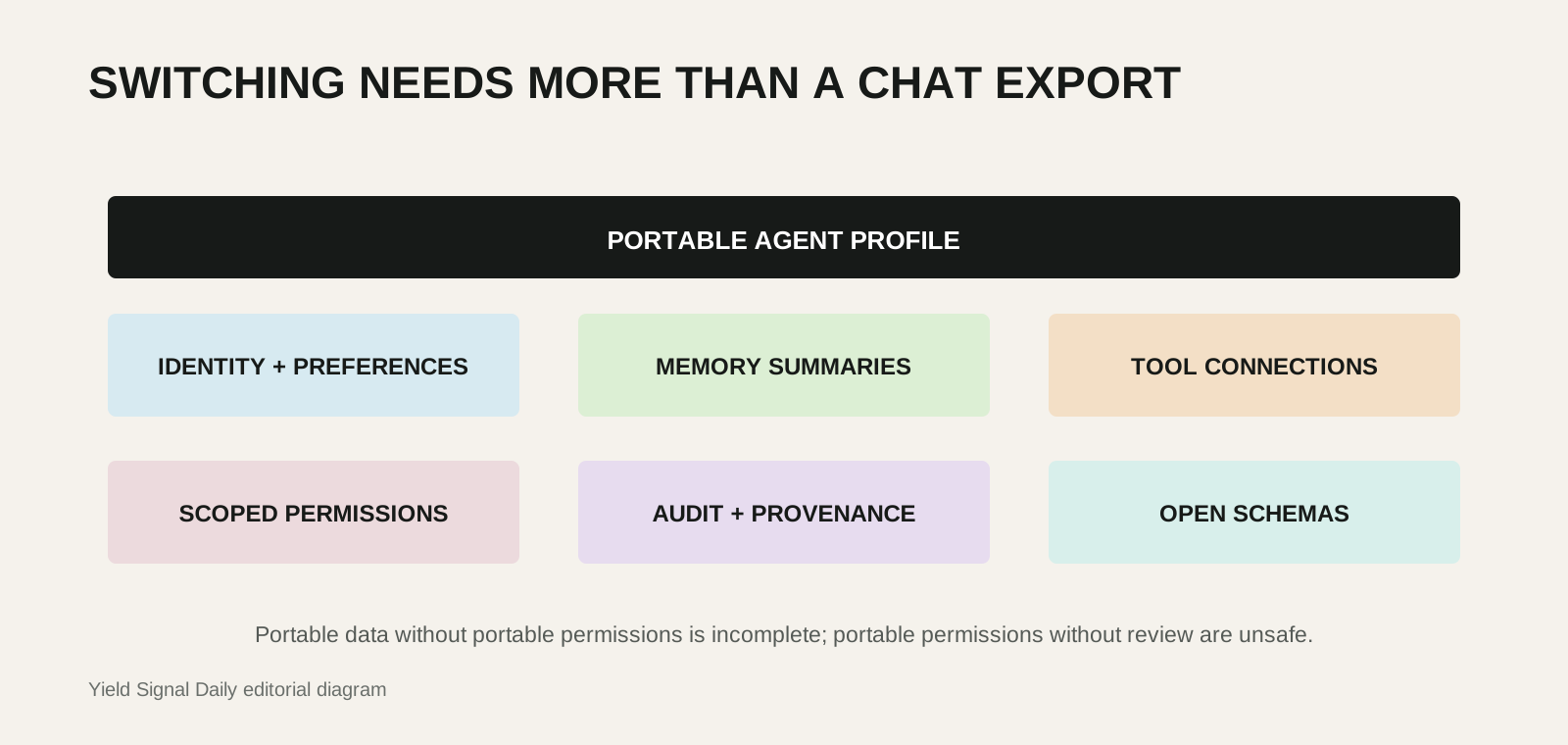
Figure: Portability requires structured context and tool state, while permissions still need explicit review at the destination. Yield Signal Daily editorial diagram.
Permissions should not transfer automatically. A new agent must ask the user to review which accounts and actions it may access. Otherwise portability becomes a mechanism for copying stale or excessive authority into a new system.
A credible portability format would separate six layers:
- user-controlled identity and preferences;
- compact memory with source references;
- tool connection descriptors without raw secrets;
- explicit permission scopes and expiration;
- audit and provenance records;
- open schemas that competing runtimes can implement.
This is technically harder than moving text, but it is the difference between cosmetic export and meaningful competition.
Independent builders should specialize before platforms close the gap
The report does not imply that startups cannot compete. It suggests that a horizontal “assistant for everything” faces an enormous distribution disadvantage.
Specialized agents have a different route. They can own a narrow workflow, use domain-specific data, integrate deeply with systems the general platform does not understand, and produce evidence that a generic answer cannot. Healthcare operations, industrial maintenance, compliance, and developer infrastructure are examples where workflow quality may matter more than consumer default placement.
Builders should preserve model portability from the beginning. Keep business state outside the model provider, define tools through stable internal interfaces, record provenance, and evaluate more than one model. That does not eliminate platform dependence, but it prevents the model API from becoming the entire product architecture.
The 84% figure is an early warning. The contest is no longer only about which model answers best. It is about which agent becomes the default interface between users and the digital economy, and whether users and businesses can leave without losing the context that made the agent useful.
Concentration at the model layer is only one part of the operating risk. The companion pieces are the enterprise control plane, portable agent identity and authorization, and a company-owned AI learning loop.